Companies have perfected the art of analyzing users to keep them scrolling on social media and other sites. This technology is built around one core principle: “the user’s attention is sacred.” In Stolen Focus, author Johann Hari uncovers how these platforms manipulate users and exploit their weaknesses. The human desire for social connection draws people to online apps, only to be met with an overwhelming amount of information. Instead of closing the app or site, we keep scrolling because the algorithm has tailored itself to our detailed preferences. This is a form of manipulation, and the more time we spend in front of screens, the more data companies collect to sell. In a disturbing cycle, Aza Raskin, the creator of the ‘infinite scroll,’ calculated that humans collectively spend over 200,000 lifetimes scrolling—a direct result of his invention. This shocking statistic made me reflect on the time I’ve spent scrolling and how much data these apps and sites have gathered about me.
Digital Detox
To better understand how social media was affecting my daily life, I decided to try a digital detox. For five days, I completely stopped using TikTok. Choosing the app was easy, but the idea of not using it was unbearable to think about. I spent an average of three hours a day on TikTok, often using it to fill free time, so I knew the detox would be a challenge. To make it harder to access, I deleted TikTok from my home screen and turned off all notifications.
Day 1
The first day was an interesting start. I was so used to scrolling on TikTok before bed that not doing so felt uncomfortable. That same morning, I found myself reflexively swiping to open TikTok while brushing my teeth and waiting for the elevator. Even waiting for class to start or for my food order to be ready felt drastically different. I wasn’t used to “just waiting.” I looked around and saw everyone else on their phones, scrolling. It reminded me of what former Google strategist James Williams said, that environmental changes are what really make a difference to an individual’s attention span.
Day 2 & 3
The next two days were similar. I still had the reflex to open TikTok and felt annoyed every time I accidentally opened a different app. To recreate the experience I got from TikTok, I tried scrolling through Instagram, Snapchat, and X (formerly Twitter). Only X managed to hold my attention, but with the 2024 U.S. Elections approaching, the negativity on the platform wasn’t doing me any favors. I reminded myself of “negativity bias” and decided it was best to delete the app before it consumed me.
How I Avoided “Doom Scrolling“:
- Do nothing. Sometimes, it’s okay to simply sit and rest.
- Work on class assignments and academic tasks. Being productive was key during this detox.
- Talk to friends. Socializing helped me learn more about myself and others.
Day 4 & 5
The last two days were easier than the first three. Initially, I felt a strong sense of FOMO and wondered how I would get through the day without scrolling. Even thinking about TikTok and the detox made me anxious, as if I was missing out on something important. However, during these final days, I focused on being productive and motivated myself to finish strong.
Data Recording and Visualization
Nicholas Felton, who spent ten years recording and visualizing his private data, believes people should understand the data they generate. Everyday activities and thoughts are powerful, and Felton’s work raises awareness about the positive influence they can have on our minds and bodies.
Similarly, the year-long project Dear Data, created by Giorgia Lupi and Stefanie Posavec, illustrates how data can shape our lives. The two formed a friendship by exchanging postcards featuring their daily data. They showed how people can use data to “become more humane and to connect with ourselves and others at a deeper level.
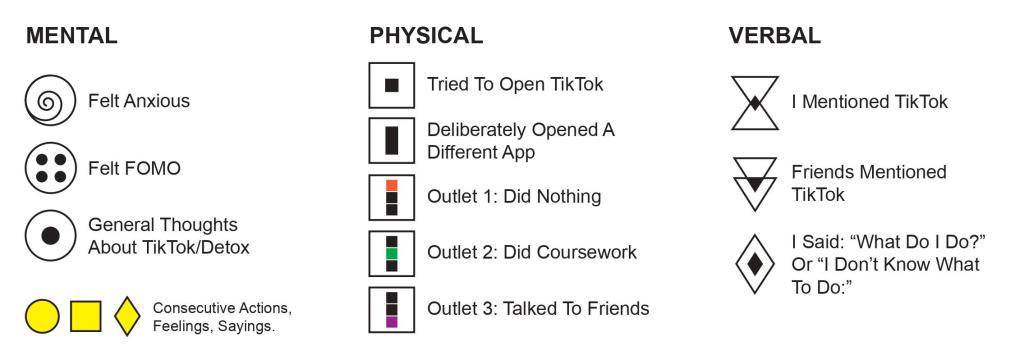
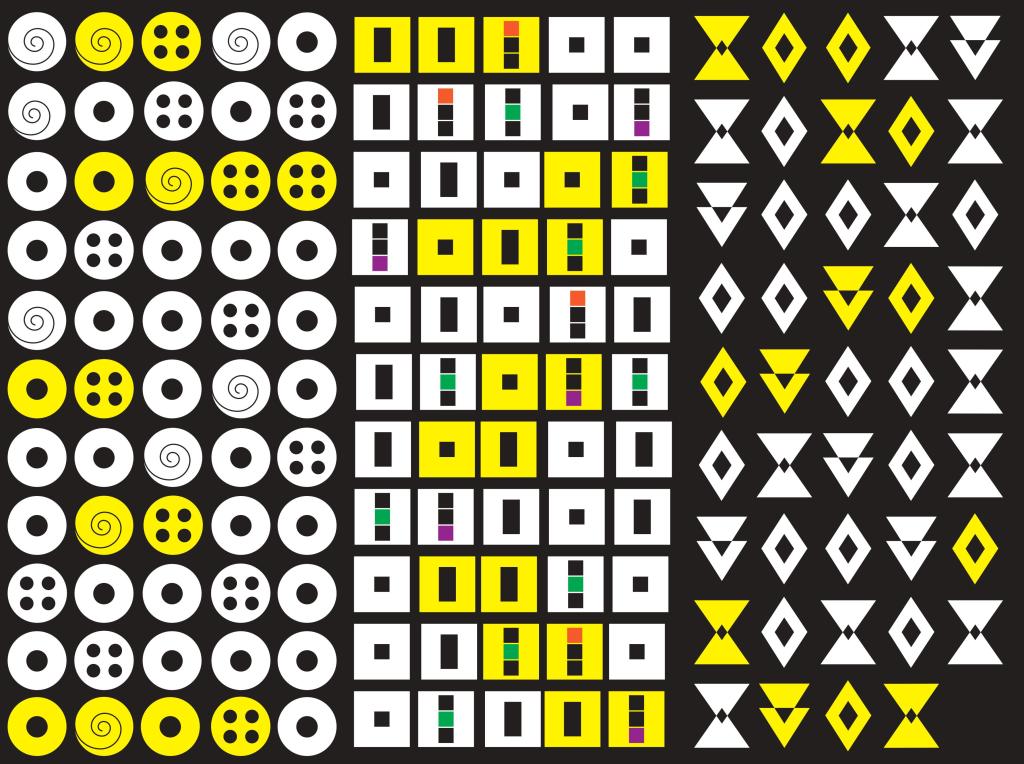
Inspired by this, I turned my detox experience into a digital visual. I divided my data into three categories and used unique symbols to represent how I felt, what I did, and what I said during the detox.
Moving Forward
I know I’ll eventually open TikTok again—it’s entertaining and helps me stay up to date. However, I’ve set a daily time limit of 45 minutes, and I’ll always remember that companies benefit most when I scroll. As Tristan Harris said, “their business model is screen time, not lifetime.”
 The Designer's Nook