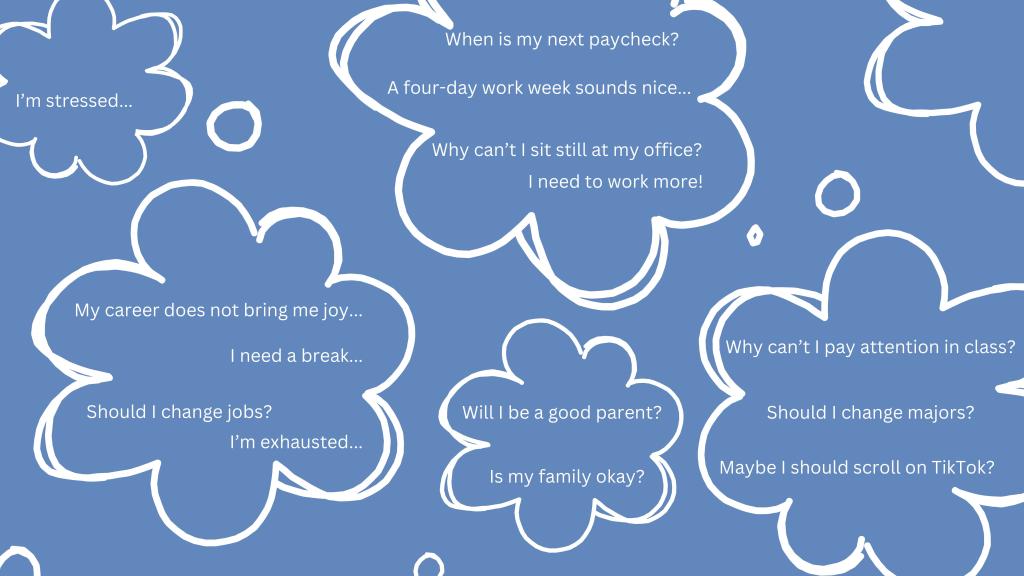
Technology has been one of the driving factors in speeding-up our world. But, it came to my own surprise that it’s not the leading cause for attention problems. According to YouGov, the two primary reasons for attention problems are stress and changes in life circumstances, each at 48%. The more I thought about it, the more it made sense. Many of us use social media as a means of distraction, wanting to get aways from uncomfortable or anxious moments. There are deeper forces at work than just sites and apps.
The Root of the Problem
Constant stressors in life can lead people to develop “hypervigilance.” In this state, people are focused on cues for potential dangers, having difficulty paying attention to other things. This problem can also affect children, says Dr. Jon Jureidini, a child psychiatrist. When children are exposed to trauma or high-stress environments, their bodies have too many stress hormones. Dr. Nicole Brown also highlighted that in order to “pay attention in normal ways, you need to feel safe.” The continuous cycle of pressure society is experiencing today is corroding attention. Stress often triggers other problems that undermine attention. If you don’t feel safe, you can’t unwind because your body is telling you to stay on high alert. In turn, you experience the inability to sleep as you’ve come to adapt to a perceived threat. Humans, however, have the potential and ability of changing. Dr. Nadine Harris, the surgeon general of California, explains that it’s key to “scale the tools that you offer to be the same scale as the problem folks are having.”
Erase the Stress
Well, what happens when common forms of stress are solved? A team tested sugarcane harvesters’ thinking skills before and after the harvest. When they had financial security (after the harvest), their IQ increased by an average of up to 13 points. Fulfilling basic needs creates a stable environment to foster attention. If your mind feels as if it’s under constant attack, you lose the ability to focus and are more susceptible to distractions.
Our Work Culture
Work environments have also drastically changed over the past century. It’s been ingrained in our culture that working harder and longer equates success. Work hours have also disappeared. One study found that a third of French professionals felt they could never unplug, for fear of missing out on an email they were expected to reply to. People don’t have the right to unplug anymore, but companies are capable of reshaping work culture. Johann Hari, author of Stolen Focus, pointed out that Covid showed that “businesses can change their working practices radically, in a very short period of time, and continue to function well.”
Another demonstration was done by Andrew Barnes, who runs Perpetual Guardian. He decided to implement a four-day workweek while maintaining the same pay. It resulted in increased productivity and focus among employees.
As a Collective
It’s clear that stress is depleting our focus and making us less capable of resisting distractions. We have to look beyond surface-level solutions and advocate for systemic changes in our technology and work dynamics. Ultimately, change will only happen if we work as a collective.
 The Designer's Nook